Commentary: She’s practically asking for it? Do Singaporeans subscribe to rape myths?
SINGAPORE: Victim-blaming comments — i.e. comments that put the onus of fugitive sexual attack on the victim — are unfortunately commonplace in our society.
Information technology's no surprise, therefore, that they've reared their ugly caput in recent days - when news broke most the rape of 15-yr old girl after a game of Truth or Dare, and the xiii Telegram groups circulating explicit images without the noesis of the people pictured.
READ: Leaked sex tapes and child porn: A await into 13 illicit Telegram chat groups
READ: 4 people arrested over 'SG Nasi Lemak' Telegram chat group
Garbed as well-pregnant concern and advice, the comments nevertheless perpetuate deeply harmful rape myths.
TOXIC SOCIAL MEDIA Churr
3 issues have featured prominently in many of the online comments about the teenage rape case: The daughter'southward intoxication, her option of company in a gang of boys, and her lack of parental supervision. They all place at to the lowest degree partial blame of her rape on her, and her parents when they did not impose strict curfews on their daughter'south movements.
Separately, in CNA'due south story about the Telegram groups, a victim referred to every bit Dania is quoted equally maxim that in her experience, women who accept revealing photos taken are shamed as being improper, and responsible for their ain predicament when those photos (inevitably, it is causeless) get circulated publicly.
READ: Commentary: The ubiquity of cameras and social media fuels unhealthy mob behaviours
The following statements might be obvious, but are worth repeating:
Drinking alcohol is not equivalent to consenting to sex activity. Spending time with boys is not equivalent to consenting to sexual activity. Leaving your child unsupervised for a nighttime is not equivalent to consenting to her having sex.
Taking a revealing photo intended for private apply is not equivalent to consenting to have it circulated to thousands of strangers.
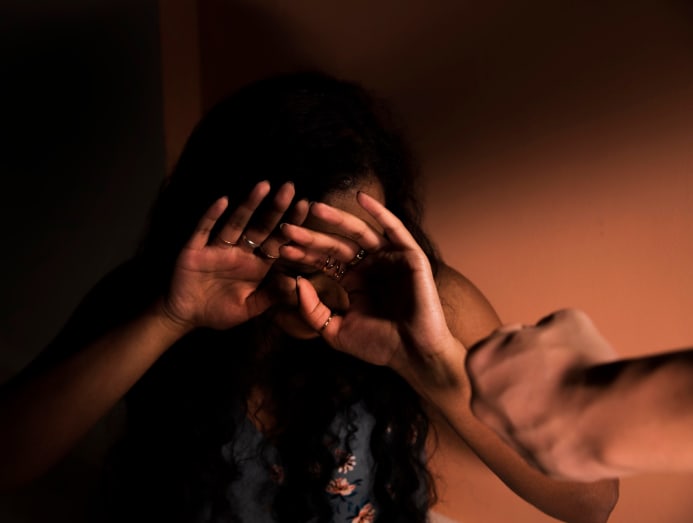
When the majority of comments on these news stories discuss what the victims did wrong, instead of what the perpetrators did incorrect, you lot might be tempted to dismiss that as idle social media chatter.
But these comments speak to underlying rape myths we keep to hold about sexual violence, alcohol consumption, the company of men and women's behaviour as a society.
RAPE MYTHS
Rape myths are beliefs about rape that serve to deny, downplay or justify sexual violence.
They help people ignore the complexity of rape in its total context — for example, the understanding that abusive relationships can feature 18-carat dear alongside manipulation and victimisation.
Rape myths determine which incidents of assail are taken seriously and considered more "real" than others.
Rape myths tin can have one or a combination of four forms. They can blame the victim (e.one thousand. "she should have resisted the attacker more"), cast doubt on allegations (east.chiliad. "she merely regrets having sex with him and is now looking for a way to feel better"), excuse the accused'due south behaviour (e.g. "he was too drunkard to know what he was doing"), or insist that sexual violence just happens to specific types of women (e.k. "slutty girls get raped and good girls don't").
For case, nosotros see the first and fourth types in the example of the teenage rape. Online commenters rushed to declare that a girl who is the "blazon that drinks", responds to sexual questions from boys when playing Truth or Dare, and stays out at night is practically request to be raped.
READ: Commentary: All this acrimony over voyeurism but what we need is respect
Rape myths enjoy a loftier level of credence in Singapore. About 45 per cent of over one,000 respondents to an IPSOS survey agreed with this statement: "Women who wear revealing apparel should not complain if men make comments about their appearance."
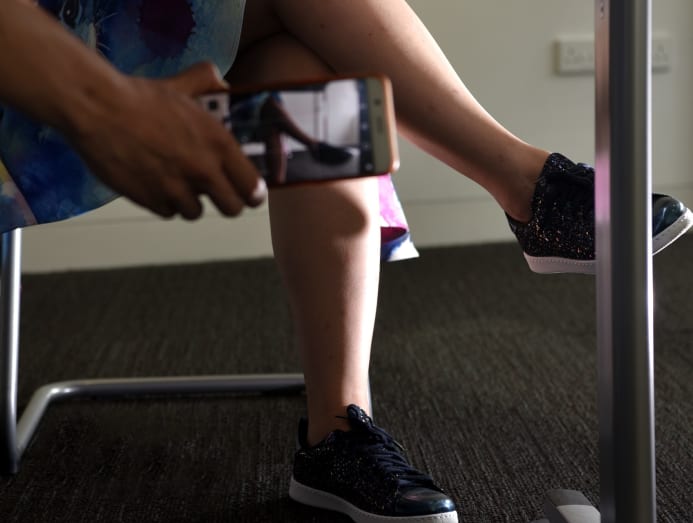
Would those respondents also hold that "women who vesture revealing dress should not complain if men have not-consensual upskirt photos of them and share them in Telegram groups"? It doesn't seem similar that much of a stretch. The sheer size of those 13 Telegram groups points to how normalised an opinion that may exist.
We Take TO CHALLENGE RAPE MYTHS
Rape myths are pernicious for three reasons.
Kickoff, they discourage assistance-seeking behaviour. By undermining women's experiences — for example, by asking questions that focus on the victim's behaviour, mannerisms — they create a sense of violation that revictimises survivors.
They can spin survivors into a cycle of cocky-doubt ("Did my wearable communicate consent to sex? Should I not talk to men in bars?"), which makes them experience too aback or too guilty to share their experiences with friends and family.
Even as many survivors try to consciously pass up rape myths, they may find it difficult to escape the socially ingrained feeling they should take done something differently or that they are somehow at mistake. Many end up isolated and do not get the support they need to assist recover from the trauma of the rape.
READ: Commentary: Here's what zero tolerance towards sexual misconduct looks like
READ: Commentary: Terms like 'lucky male child' and 'men will exist men' are problematic double standards
Second, for the same reasons as higher up, rape myths discourage reporting. Aware's Sexual Assault Intendance Centre finds that seven out of x of its clients practise not written report their experiences to the constabulary. This ways that most perpetrators are never brought to justice, and live out their lives without whatsoever consequences for their tearing actions.
Third, rape myths are used to create cautionary tales, mostly aimed at women, outlining behaviour that is appropriate. Women are routinely brash to monitor their booze intake when they exit, never get out their drinks unattended, or merely spend time with men when other women are present.
At an event Aware hosted on so-chosen "revenge porn" in 2018, a couple of well-meaning parents suggested the all-time mode for immature women to protect themselves from seeing their doctored photos on pornographic websites was to withdraw entirely from social media.

Whether or not these measures strike you lot as realistic (is information technology reasonable to look women to be able to withdraw from online spaces in this 24-hour interval and age?), y'all may find the human action of advising them to exist harmless.
But at that place is harm in prescribing these "safety tips" to women. The harm lies in the implication that if you fail to accept any of these steps, yous take somehow caused yourself to be assaulted, and should be held responsible for this failure, whereas the full responsibility for attack should lie upon the assaulter's shoulders.
WHAT WILL HELP
Traditional gender norms — e.g. that men are always the initiators of sex, that women must offer token "resistance" to sex to be considered lady-like, that sexual activity is some kind of conquest and women sexualised objects to conquer — inform rape myths.
Sex education in schools often reinforces these traditional gender norms, and, by focusing on abstinence only, does not adequately prepare students to deal with intimate relationships.
Although gender equality instruction has long been suggested as a primal component to violence prevention strategies, it does not feature prominently in most school curricula.
READ: Commentary: University campuses must exist safe places for all
READ: Commentary: The tightrope universities walk in tackling orientation activities like the 'kukubird' controversy
Irresponsible media as well, reinforces these gender norms through the hyper-sexualisation and sexual objectification of women, which leads to greater acceptance of violence confronting women and victim-blaming.
We need a two-pronged strategy to promote gender equality that volition assistance address violence confronting women. Kickoff, we must innovate comprehensive sex didactics in schools, and in-person mandatory anti-harassment trainings in colleges. These should cover gender roles and consent, and deconstruct rape myths.

Second, we need media-based interventions. Apart from public awareness campaigns that challenge traditional gender norms, nosotros demand new media guidelines that discourage the utilise of gender stereotypes and hypersexualised female person bodies.
We could learn from the Ad Standards Authority of Uk, which banned the delineation of men and women engaged in gender-stereotypical activities before this year. News outlets should prefer reporting guidelines on sexual violence to sensitively and ethically communicate sexual violence trauma.
Information technology's time we addressed these cultural attitudes, and promised survivors that we will indeed aim for zero tolerance of sexual violence.
Shailey Hingorani is Caput of Research and Advocacy at AWARE.
Source: https://cnalifestyle.channelnewsasia.com/commentary/commentary-shes-practically-asking-it-do-singaporeans-subscribe-rape-myths-282671

Enregistrer un commentaire for "Commentary: She’s practically asking for it? Do Singaporeans subscribe to rape myths?"